
Glycine Before Bed: A Simple Path to Deeper Sleep
This simple amino acid might be the missing piece in your pre-bed ritual for better rest. Let's look at the science.
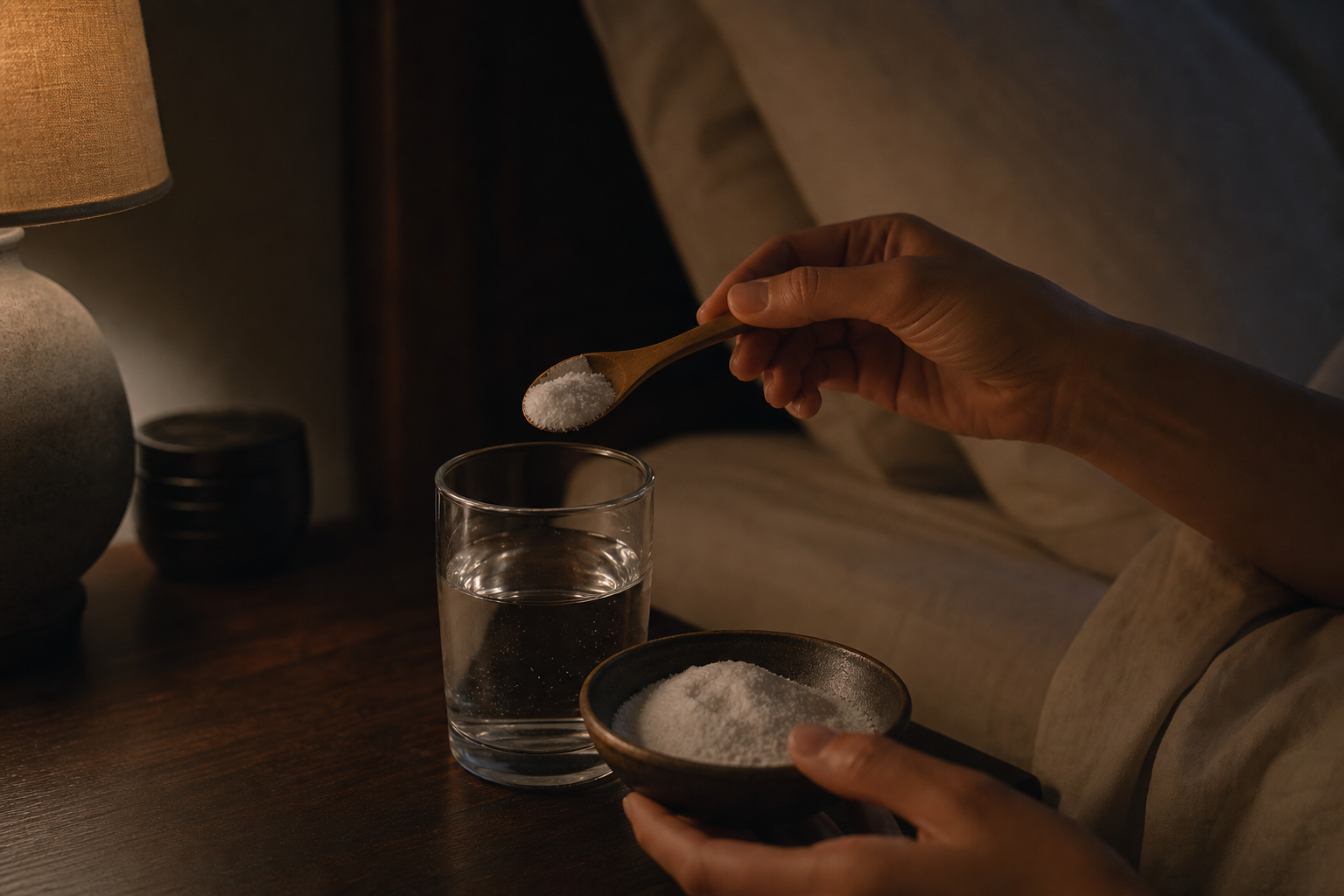
- Glycine is a non-essential amino acid that may support sleep quality by helping to lower core body temperature.
- Research suggests that around 3 grams of glycine taken before bed can help individuals fall asleep faster and feel more rested the next day.
- It works in part by acting as a calming neurotransmitter and increasing blood flow to the skin, which facilitates heat loss.
- Glycine is a supportive tool for sleep, but it works best alongside a consistent sleep hygiene routine.
The Sleep Aid Hiding in Plain Sight
In the endless search for better sleep, we’re often presented with a dizzying array of exotic herbs, complex gadgets, and restrictive protocols. It can feel overwhelming. But what if one of the most effective tools for supporting a good night's rest wasn't some rare botanical, but a simple, fundamental building block of life? It’s time we had an honest conversation about glycine, an amino acid that’s been quietly gaining a reputation among researchers for its role in sleep support.
Glycine is the smallest and simplest of the 20 amino acids that make up the proteins in our bodies. It’s classified as “non-essential,” but that term is misleading. It doesn’t mean your body doesn’t need it; it just means a healthy body can typically produce it on its own. Glycine is crucial for a host of biological functions, from helping to build collagen for healthy skin and connective tissue to contributing to the production of antioxidants like glutathione. It also plays a key role in the central nervous system, which is where its connection to sleep begins.
How Glycine Supports the Sleep Process
Unlike pharmaceutical sleep aids, glycine doesn't act like a heavy sedative that forces you into unconsciousness. Instead, it seems to work by facilitating the body’s natural process of falling asleep. Think of it less as a sledgehammer and more as a gentle guide, helping your body take the physiological steps it needs to transition into a state of rest. It primarily does this through two distinct and well-researched mechanisms.
First, glycine appears to help regulate core body temperature. A slight drop in your body's core temperature is a critical signal that tells your brain it's time to sleep. Glycine helps initiate this process by increasing blood flow to the skin, a phenomenon known as vasodilation [1]. This allows more heat to dissipate from your body's core to its extremities—your hands and feet—which effectively lowers your overall core temperature and may help you fall asleep more quickly [2].
Second, glycine functions as an inhibitory neurotransmitter, particularly in the brainstem and spinal cord. In simple terms, it helps put the brakes on neural activity. By binding to specific receptors in the brain, glycine can help reduce nerve signal transmission, promoting a sense of calm and quiet in the nervous system. This action may help counter feelings of restlessness or an overactive mind at bedtime, making it easier to drift off without the mental chatter that often keeps people awake.
A Look at the Clinical Evidence
This all sounds good in theory, but where is the proof? Fortunately, a series of human clinical trials, primarily from Japan, has provided compelling evidence. In these studies, researchers typically gave participants who were dissatisfied with their sleep a dose of 3 grams of glycine about an hour before bed. The results were consistent and encouraging, showing improvements in both subjective feelings about sleep and objective, measurable changes.
Beyond the sleep lab, the most relatable findings were about how people felt the next day. Participants in one study reported a significant reduction in fatigue and daytime sleepiness after taking glycine the night before [3]. They also noted improvements in what they described as “liveliness and peppiness” and “clear-headedness.” These next-day benefits are noteworthy because they occurred without changes in total sleep time, suggesting the *quality* of sleep was the key factor.
Perhaps most importantly, participants consistently reported that glycine helped them feel more satisfied with their sleep, without the grogginess or 'hangover' effect sometimes associated with other sleep aids.
What's more, this enhanced sleep quality translated into better cognitive function. In one trial, participants who took glycine performed better on a computerized memory recognition task the following morning. This demonstrates a tangible link between the glycine-supported sleep and improved mental performance, a critical outcome for busy adults who need to be sharp and focused during the day.
Practical Ways to Think About Glycine
Glycine is naturally found in protein-rich foods. Bone broth is famously rich in it, as are other sources like gelatin, meat, poultry, fish, dairy, and legumes. However, while a healthy diet provides glycine for its foundational roles, getting the 3-gram dose used in sleep studies from food alone right before bed can be impractical. You would need to consume a very large portion of meat or several cups of bone broth, which might not be conducive to comfortable sleep.
For this reason, many people turn to supplements. Glycine is widely available as a standalone powder, which offers flexibility. It's also a key component in certain supplement formulas. For example, you’ll find it in magnesium glycinate. This popular form of magnesium binds the mineral to glycine molecules. The pairing is strategic: magnesium also supports relaxation and nervous system function, and the glycine may enhance the absorption of magnesium while providing its own unique benefits for sleep.
A Final Word on Safety
As an amino acid that our body produces and uses every day, glycine is generally regarded as safe and is well tolerated by most people at the doses used in studies. It doesn't carry the risks of dependency associated with some sleep medications. That said, it is always a good practice to speak with a trusted healthcare professional before adding any new supplement to your routine, especially if you have an existing medical condition, are taking other medications, or are pregnant or breastfeeding.
A Tool, Not a Magic Bullet
So, is glycine the simple solution for all sleep woes? Not exactly. No supplement is a magic bullet, and it's important to maintain a healthy dose of skepticism toward anything that promises a perfect night's sleep. Glycine is a tool—a well-researched and promising one—that can support your body's natural sleep processes. It’s not a substitute for the non-negotiable foundations of good sleep hygiene.
A consistent sleep schedule, a cool and dark bedroom, avoiding caffeine late in the day, and managing evening light exposure are the pillars of healthy sleep. Glycine works best when it's added to this solid foundation, not when it's used to compensate for poor habits. It can help nudge your physiology in the right direction, but lifestyle is still the driver. By pairing smart supplementation with good sleep hygiene, you give yourself the best possible chance for a truly restorative night.
FAQ
›Is glycine a sedative? Will it make me groggy?
No, glycine is not considered a sedative. It doesn't induce sleep in the same way as a sleeping pill. Instead, it supports the body's natural transition into sleep. Studies show that participants actually feel less groggy and more clear-headed the day after taking glycine.
›How is glycine different from magnesium glycinate?
Glycine is a standalone amino acid. Magnesium glycinate is a compound where the mineral magnesium is chemically bonded to glycine molecules. This form is known for being gentle on the stomach and highly absorbable. When you take magnesium glycinate, you get the benefits of both magnesium (which also supports relaxation) and glycine.
›Can I get enough glycine for sleep support from bone broth or other foods?
While foods like bone broth, gelatin, and meat are excellent dietary sources of glycine, it is difficult to consume the specific 3-gram dose used in sleep studies from food alone right before bed. A supplement offers a more practical and targeted way to achieve this amount.
›How long does it take for glycine to work for sleep?
Based on research protocols, glycine is typically taken about 60 to 90 minutes before bed. Its effects on helping to lower body temperature and calm the nervous system begin within that timeframe to help prepare the body for sleep. Most people report noticing a difference in sleep quality from the first few nights of use.
References
- [1]Bannai M, Kawai N. New therapeutic strategy for amino acid medicine: glycine improves the quality of sleep. J Pharmacol Sci. 2012;118(2):145-8. Source
- [2]Kawai N, Sakai N, Okuro M, et al. The sleep-promoting and hypothermic effects of glycine are mediated by NMDA receptors in the suprachiasmatic nucleus. Neuropsychopharmacology. 2015;40(6):1405-16. Source
- [3]Inagawa K, Hiraoka T, Kohda T, Yamadera W, Takahashi M. Subjective effects of glycine ingestion before bedtime on sleep quality. Sleep and Biological Rhythms. 2006;4(1):75-77. Source
- [4]Yamadera W, Inagawa K, Chiba S, Bannai M, Takahashi M, Nakayama K. Glycine ingestion improves subjective sleep quality in human volunteers, correlating with polysomnographic changes. Sleep and Biological Rhythms. 2007;5(2):126-131. Source
Featured products
Editorially relevant — not paid placements.
Jordan writes about recovery, performance, and the science of feeling good. Former collegiate athlete, now obsessed with the small daily inputs that compound into long-term wellness.
Dr. Natarajan is a board-certified internist with a special interest in evidence-based supplementation and lifestyle medicine. She reviews Vitalytics content for medical accuracy.
Keep reading


The 5-minute briefing
One short, source-backed email each Sunday on sleep, energy, recovery, and daily wellness.