
Rhodiola Rosea: Adaptogen for Mental Fatigue
A no-hype look at how this arctic root may help you manage stress and fight mental fatigue.
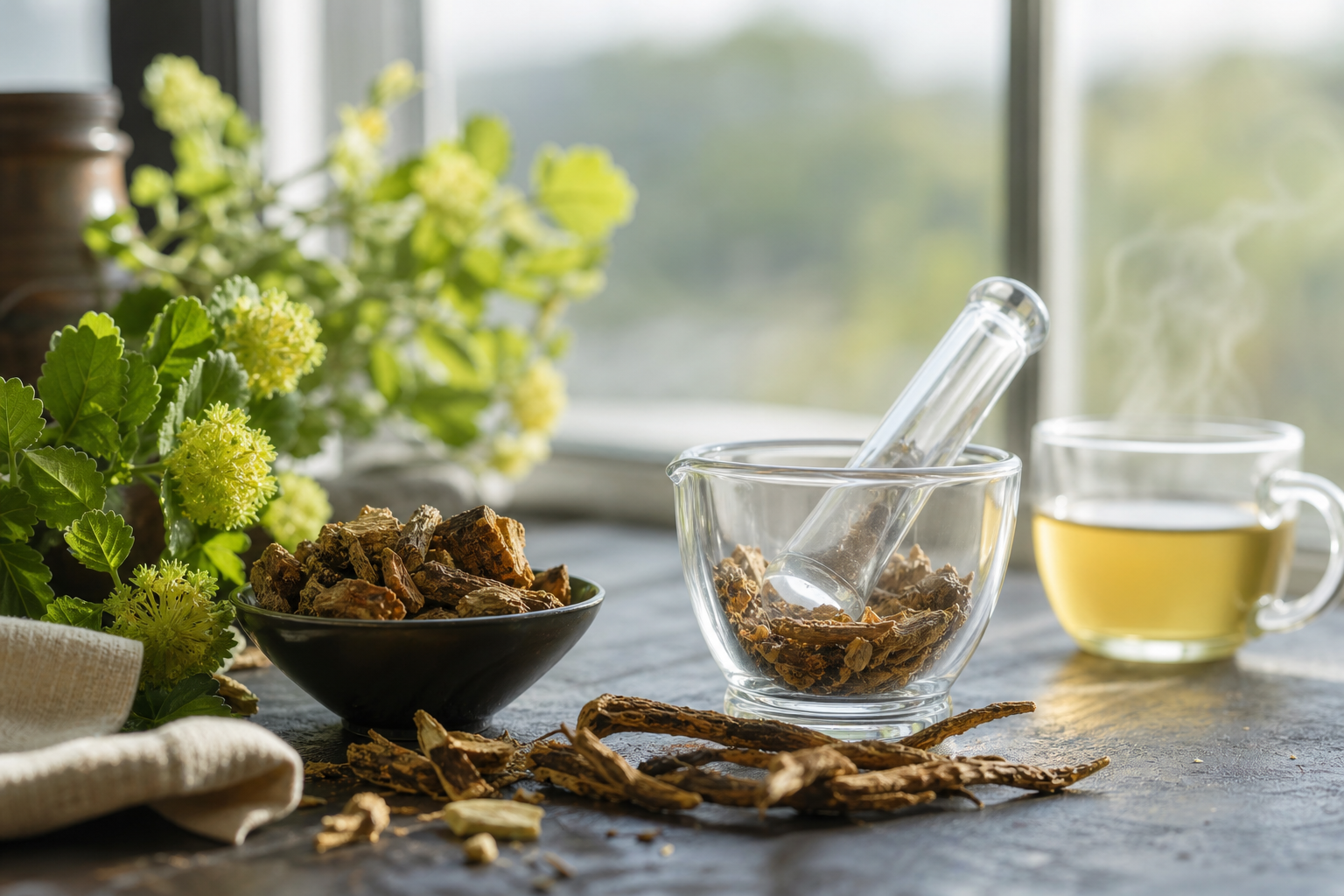
- Rhodiola rosea is an adaptogenic herb that has been studied for its potential to support the body's resilience to various stressors.
- Research suggests it may help reduce feelings of mental fatigue and support cognitive performance, particularly in stressful situations.
- Its primary active compounds, rosavins and salidroside, are believed to influence the body's stress-response system and cellular energy production.
- Rhodiola is a supportive tool and is most effective when combined with foundational health habits like adequate sleep, nutrition, and stress management.
- When choosing a supplement, look for a standardized extract to ensure a consistent concentration of its active compounds.
In the world of wellness, buzzwords fly around faster than you can say 'biohacking.' One term that has moved from niche herbalism into the mainstream is 'adaptogen.' These are substances purported to help our bodies 'adapt' to stress. While the claims can sometimes be overblown, certain adaptogens have a surprising amount of research behind them. At the top of that list is Rhodiola rosea, an herb with a long history of use for supporting stamina and vitality.
Also known as arctic root or golden root, Rhodiola rosea is a perennial plant that thrives in the cold, mountainous regions of Europe and Asia. Its resilience in such harsh environments is a clue to its traditional use. For centuries, people in Scandinavia and Siberia have used it to cope with the physical demands of a cold climate and to support physical endurance. Today, we’re less concerned with surviving arctic winters and more concerned with surviving back-to-back Zoom meetings and endless to-do lists. This article will take a level-headed look at what Rhodiola is, what the science says about it, and how it might fit into a modern wellness strategy for managing mental fatigue.
What Are Adaptogens, Really?
Before diving into Rhodiola specifically, it helps to clear up what we mean by 'adaptogen.' The term was coined by a Soviet scientist in the mid-20th century to describe substances that could increase 'non-specific resistance' to stress. Think of it less like a sledgehammer that forces a specific change in the body, and more like a thermostat that helps the body maintain balance, or homeostasis. The idea is that adaptogens help buffer our physiological response to stressors, whether they're physical (like intense exercise), chemical (like environmental toxins), or emotional (like work pressure).
According to the original definition, a substance must meet three criteria to be classified as an adaptogen. First, it must be non-toxic at normal doses. Second, it must help the body cope with a wide range of stressors. Third, it must have a normalizing effect, meaning it helps bring bodily systems back into balance. Rhodiola rosea is one of the most-studied plants in this category, believed to help modulate the body's central stress-response system without being overly stimulating or sedating. It aims for the middle ground.
The Science of Rhodiola and Mental Fatigue
The potential benefits of Rhodiola are attributed to its active compounds, primarily a group of chemicals called rosavins (including rosavin, rosin, and rosarin) and another compound called salidroside. Most quality supplements are standardized to contain a specific percentage of these compounds, typically around 3% rosavins and 1% salidroside, as this ratio reflects what is naturally found in the root and has been used in clinical research. [1]
So how might these compounds work? The primary theory revolves around Rhodiola's influence on the hypothalamic-pituitary-adrenal (HPA) axis. This is the intricate communication network between your brain and your adrenal glands that governs your response to stress. When you encounter a stressor, the HPA axis kicks into gear, culminating in the release of cortisol. While essential for short-term survival, chronic activation of this system can lead to feelings of burnout and fatigue. Rhodiola is thought to help modulate this system, supporting more balanced cortisol levels and preventing the peaks and valleys that contribute to feeling exhausted. [1]
Instead of masking fatigue like caffeine, rhodiola is thought to support the underlying systems involved in energy production and stress management.
Another proposed mechanism relates to cellular energy. Every cell in your body is powered by a molecule called adenosine triphosphate (ATP). Feeling tired is, on a cellular level, often related to a dip in ATP production. Some research suggests that Rhodiola can support the synthesis of ATP, which may contribute to improved stamina and a reduction in fatigue. [2] By acting on both the central stress response and cellular energy pathways, Rhodiola offers a multi-pronged approach to supporting mental and physical endurance.
What Does the Research Say About Stress and Performance?
While traditional use and mechanistic theories are interesting, the real test is in human clinical trials. A systematic review published in *BMC Complementary and Alternative Medicine* concluded that Rhodiola may be useful for supporting physical performance and alleviating mental fatigue. [2] Though the authors noted that the quality of some studies was variable, the overall trend was positive. It's important to approach these findings with a healthy dose of skepticism—the evidence is promising, but not yet definitive.
Another study focused on a different kind of stress: final exams. For this trial, students in a 'stress-induced fatigue' state were given either a low-dose Rhodiola regimen or a placebo. The group taking Rhodiola showed significant improvements in physical fitness, mental fatigue, and neuro-motor tests. Their general well-being was also reported to be much better than the placebo group. [4] These studies, while small, point toward a consistent theme: Rhodiola appears to help the mind and body function more effectively under pressure.
Practical Guidance for Using Rhodiola
If you're considering adding Rhodiola to your routine, there are a few practical points to consider. First, quality matters. Look for supplements that specify they contain a standardized extract of Rhodiola rosea—not other, less-studied species of Rhodiola. The standardization to 3% rosavins and 1% salidroside is a key indicator of a product that aligns with what has been used in clinical research. This ensures you're getting a consistent and effective amount of the active components.
Ultimately, Rhodiola rosea is not a magic bullet for a stressful life, nor is it a replacement for the fundamentals of good health. It is a tool. It can support your body's innate resilience, but it cannot make up for a lack of sleep, poor nutrition, or a complete absence of stress management practices. Think of it as a helpful ally in your wellness toolkit—one that works best when used in concert with a healthy lifestyle, not as a substitute for one.
FAQ
›How long does it take for Rhodiola to work?
Effects can vary. Some people report feeling benefits, such as increased mental clarity, relatively quickly—within a few hours or days. For others, the effects on stress resilience and fatigue may be more subtle and build up over several weeks of consistent use.
›Can I take Rhodiola rosea every day?
Many people take Rhodiola daily for extended periods. However, some practitioners recommend 'cycling' adaptogens—taking them for a number of weeks or months, followed by a break of a week or two. This is thought to maintain the body's sensitivity to the herb's effects. It's best to discuss a long-term strategy with your healthcare provider.
›What's the difference between Rhodiola and Ashwagandha?
While both are popular adaptogens that help the body manage stress, they have slightly different profiles. Rhodiola is generally considered to be more stimulating and energizing, making it a popular choice for combating fatigue and supporting daytime performance. Ashwagandha is often seen as more calming and restorative, commonly used to support sleep and reduce feelings of anxiety. Some people use both, but at different times of the day.
›Are there any side effects of taking Rhodiola?
Rhodiola is generally well-tolerated. When side effects do occur, they are typically mild and may include jitteriness, difficulty sleeping (especially if taken late in the day), or mild headache. Starting with a lower dose can help you assess your tolerance. Always consult your healthcare provider before beginning any new supplement, particularly if you are pregnant, nursing, or taking medications like antidepressants or blood thinners.
References
- [1]Panossian A, Wikman G. Effects of Adaptogens on the Central Nervous System and the Molecular Mechanisms Associated with Their Stress-Protective Activity. Pharmaceuticals (Basel). 2010;3(1):188-224. Source
- [2]Ishaque S, Shamseer L, Bukutu C, Vohra S. Rhodiola rosea for physical and mental fatigue: a systematic review. BMC Complement Altern Med. 2012;12:70. Source
- [3]Darbinyan V, Kteyan A, Panossian A, Gabrielian E, Wikman G, Wagner H. Rhodiola rosea in stress induced fatigue--a double blind cross-over study of a standardized extract SHR-5 with a repeated low-dose regimen on the mental performance of healthy physicians during night duty. Phytomedicine. 2000;7(5):365-71. Source
- [4]Spasov AA, Wikman GK, Mandrikov VB, Mironova IA, Neumoin VV. A double-blind, placebo-controlled pilot study of the stimulating and adaptogenic effect of Rhodiola rosea SHR-5 extract on the fatigue of students caused by stress during an examination period with a repeated low-dose regimen. Phytomedicine. 2000;7(2):85-9. Source
Featured products
Editorially relevant — not paid placements.
Maya is a nutrition researcher and writer focused on translating peer-reviewed evidence into practical, everyday habits. She has spent the last decade reading clinical trials so you don't have to.
Dr. Natarajan is a board-certified internist with a special interest in evidence-based supplementation and lifestyle medicine. She reviews Vitalytics content for medical accuracy.
Keep reading

The 5-minute briefing
One short, source-backed email each Sunday on sleep, energy, recovery, and daily wellness.