
The Science of Functional Mushrooms: Lion's Mane, Cordyceps & Reishi Explained
What the human research actually shows — and what the marketing leaves out.
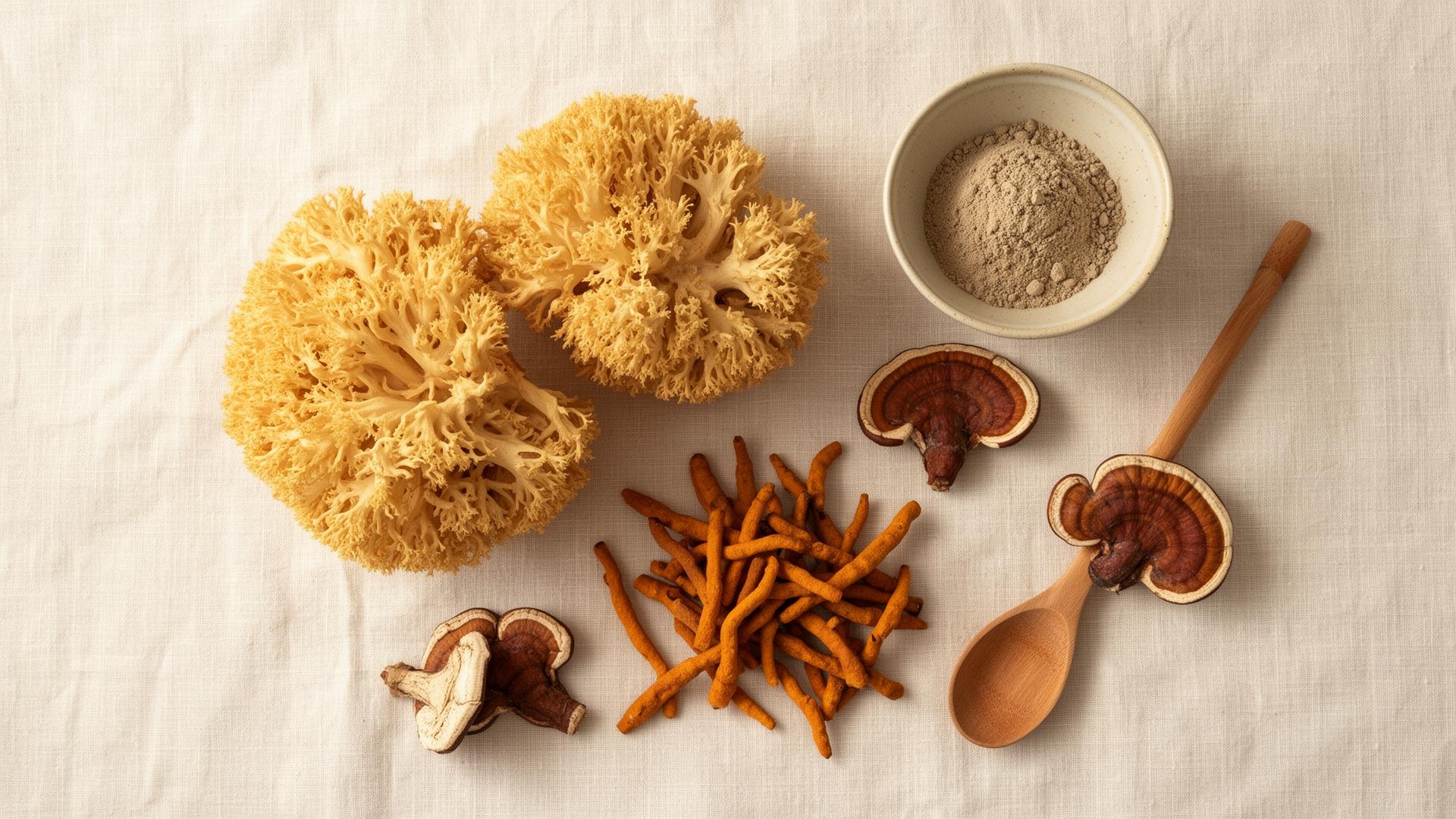
- Lion's mane, cordyceps, and reishi are not stimulants — effects build over weeks.
- Lion's mane has the most cognitive research, with small but consistent positive trials.
- Cordyceps has the strongest exercise-tolerance evidence among the three.
- Quality matters: look for fruiting-body extracts with stated beta-glucan content.
Functional mushrooms have moved from niche supplement shelves to mainstream coffee shops in under a decade. But behind the marketing, what does the research actually say about lion's mane, cordyceps, and reishi? Here's a plain-language tour of the evidence as it stands in 2026.
Lion's Mane: the brain mushroom
Lion's mane (Hericium erinaceus) is the most-discussed mushroom for cognitive support. Its appeal comes from two compound families — hericenones (in the fruiting body) and erinacines (in the mycelium) — both shown in lab studies to stimulate nerve growth factor (NGF), a protein involved in keeping neurons healthy [2].
What the human studies show
A small but growing body of randomized trials has tested lion's mane in adults. A 2019 trial in older adults with mild cognitive complaints found short-term improvements on cognitive screening tools after 12 weeks of supplementation, though benefits faded after stopping [3]. A 2023 placebo-controlled study in healthy adults reported faster performance on a basic processing-speed task after a single dose, with subjective stress reduced at 28 days [4].
Cordyceps: the energy mushroom
Cordyceps militaris (the lab-cultivated species used in most supplements) is studied for its effects on oxygen utilization and exercise tolerance. A 2017 trial of 28 adults reported improved high-intensity exercise performance after 1 and 3 weeks of cordyceps supplementation versus placebo [5].
The proposed mechanism involves cordycepin and adenosine analogs that may support cellular ATP production and oxygen efficiency. Translation: instead of being a stimulant like caffeine, cordyceps may help your cells use the energy substrates already available.
Reishi: the calm mushroom
Reishi (Ganoderma lucidum) has the longest documented traditional use of the three, going back roughly 2,000 years in East Asian medicine. Modern research focuses on its triterpenes and polysaccharides for immune modulation and stress resilience.
Human trials are smaller and more mixed than for the other two, but a 2012 study reported reductions in fatigue and improvements in well-being scores in breast cancer survivors after 4 weeks of supplementation [6]. Reishi is typically taken in the evening because of its relaxing reputation, though research on its sleep effects is preliminary.
How they compare
| Mushroom | Primary use | Best time | Caffeine-like? |
|---|---|---|---|
| Lion's Mane | Focus / clarity | Morning | No |
| Cordyceps | Energy / endurance | Pre-workout | No |
| Reishi | Calm / wind-down | Evening | No |
Myth vs. fact
What to look for in a product
- Fruiting-body extract listed first, with a stated beta-glucan percentage (not just "polysaccharides").
- Third-party tested for contaminants and potency.
- Single-origin or clearly labeled species (Hericium erinaceus, Cordyceps militaris, Ganoderma lucidum).
- Avoid products that hide behind "proprietary blends" without disclosing per-ingredient doses.
The bottom line
Functional mushrooms are one of the more promising categories in everyday wellness — not because any single trial is definitive, but because the safety profile is excellent and the early signal is encouraging. Treat them as gentle, long-game tools that pair with — not replace — sleep, training, and nutrition.
If you're curious to experiment, give a single mushroom 4–6 weeks at the dose used in studies, track how you feel, and adjust from there.
References
- [1]Venturella G., et al. "Medicinal Mushrooms: Bioactive Compounds, Use, and Clinical Trials." Int J Mol Sci. 2021. Source
- [2]Mori K., et al. "Nerve growth factor-inducing activity of Hericium erinaceus." Biol Pharm Bull. 2008. Source
- [3]Saitsu Y., et al. "Improvement of cognitive functions by oral intake of Hericium erinaceus." Biomed Res. 2019. Source
- [4]Docherty S., et al. "The Acute and Chronic Effects of Lion's Mane Mushroom Supplementation on Cognitive Function, Stress and Mood in Young Adults." Nutrients. 2023. Source
- [5]Hirsch K.R., et al. "Cordyceps militaris Improves Tolerance to High-Intensity Exercise After Acute and Chronic Supplementation." J Diet Suppl. 2017. Source
- [6]Zhao H., et al. "Spore Powder of Ganoderma lucidum Improves Cancer-Related Fatigue in Breast Cancer Patients Undergoing Endocrine Therapy." Evid Based Complement Alternat Med. 2012. Source
Featured products
Editorially relevant — not paid placements.
Maya is a nutrition researcher and writer focused on translating peer-reviewed evidence into practical, everyday habits. She has spent the last decade reading clinical trials so you don't have to.
Dr. Natarajan is a board-certified internist with a special interest in evidence-based supplementation and lifestyle medicine. She reviews Vitalytics content for medical accuracy.
Keep reading
The 5-minute briefing
One short, source-backed email each Sunday on sleep, energy, recovery, and daily wellness.