
L-Theanine + Caffeine: The Synergy Backed by EEG Studies
A look at the science behind the popular 2:1 focus stack and what EEG studies reveal about its effects on the brain.
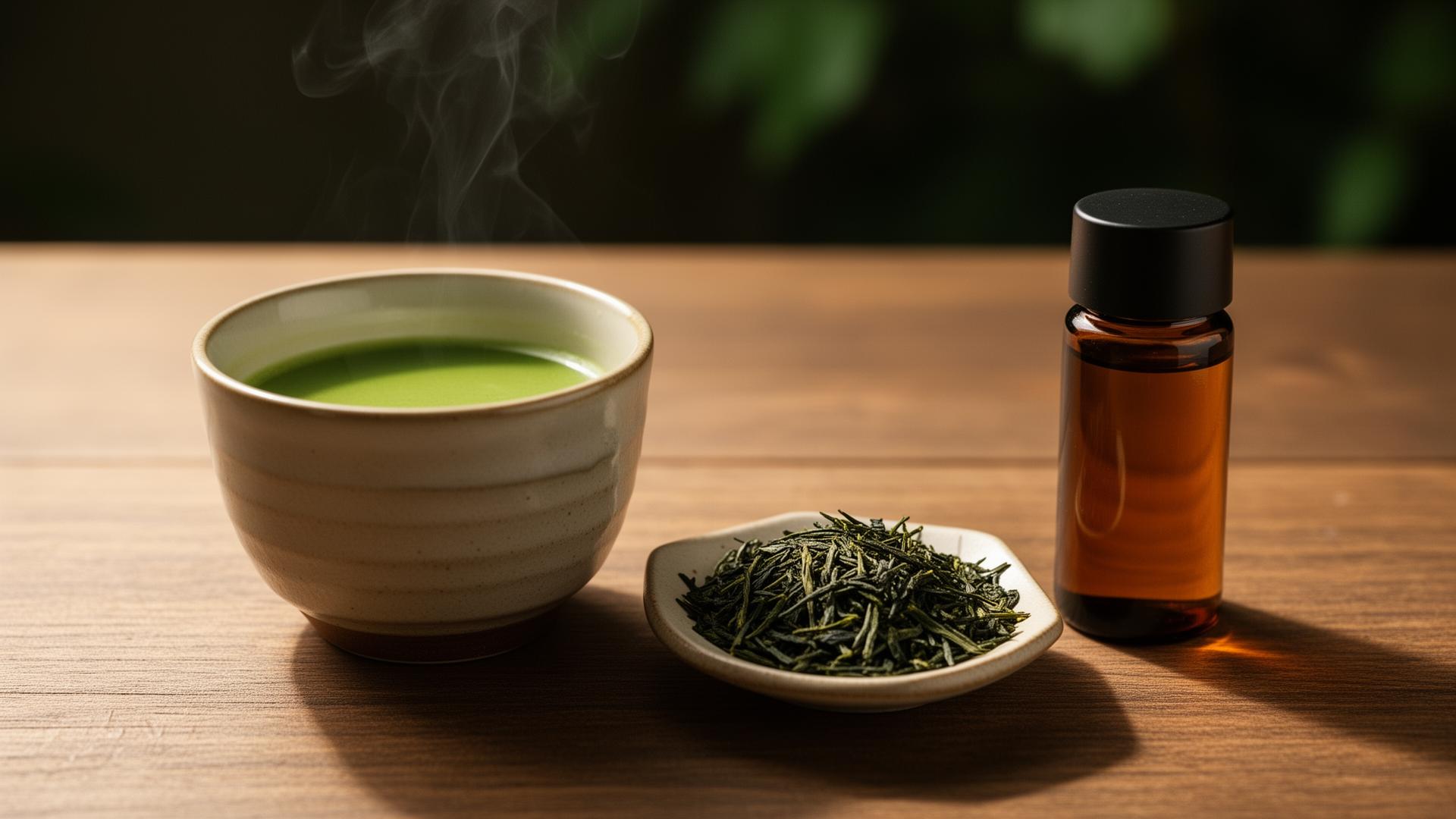
- L-theanine is an amino acid found in tea that may promote a state of 'wakeful relaxation'.
- When combined with caffeine, L-theanine can help reduce feelings of jitters and support focus.
- The common 2:1 ratio (L-theanine to caffeine) is a guideline derived from clinical studies.
- Effectiveness depends on individual factors like caffeine tolerance, genetics, and body weight.
- This combination supports cognitive function; it does not replace foundational health habits like sleep.
What is L-Theanine?
L-theanine is an amino acid analogue found almost exclusively in the tea plant ( Camellia sinensis ) and one rare species of mushroom. Unlike the essential amino acids we must get from our diet, L-theanine is not used to build proteins. Instead, its primary value lies in its unique ability to cross the blood-brain barrier and influence brain function. Once there, it has a fascinating effect on our mental state. It's largely responsible for the unique feeling of calm alertness many people experience when drinking green tea.
The key to L-theanine's effects lies in its influence on brain waves. Specifically, it has been shown to increase the activity of alpha brain waves, particularly in the occipital and parietal regions of the brain [1]. Alpha waves are associated with a state of 'wakeful relaxation'—the kind of calm, effortless alertness you might feel while daydreaming or meditating. This state is distinct from the drowsy, slow-wave states associated with sleep, and it sets the stage for L-theanine’s synergistic relationship with caffeine.
A Tale of Two Compounds: How Caffeine and L-Theanine Work in Synergy
On its own, caffeine is the world's most popular psychoactive substance for a reason. It works primarily by blocking adenosine receptors in the brain. Adenosine is a neurotransmitter that promotes sleepiness; by blocking it, caffeine promotes wakefulness and alertness. However, for many, this stimulation comes with a downside: jitters, anxiety, and a subsequent energy crash. This is where L-theanine comes in, acting as a modulator to refine and smooth out caffeine's raw power.
The synergy between L-theanine and caffeine is not just about taking the edge off. Studies show that the combination may support cognitive performance more effectively than either compound does on its own. Researchers have observed that when taken together, the duo can help lead to improvements in attention, reaction time, and the ability to switch between tasks [2, 3]. The L-theanine appears to buffer the over-excitable state that high doses of caffeine can induce, allowing the user to better harness the stimulant's focus-enhancing benefits.
This complementary action may also involve neurotransmitter systems. While caffeine stimulates, L-theanine is thought to support levels of inhibitory neurotransmitters like GABA, which has a calming effect. By working on different pathways that ultimately influence alertness and attention, the two compounds create a balanced mental state that individuals describe as 'clean energy'—alert and focused, but without the nervous tension.
The 2:1 Ratio: Unpacking the Popular Dosing Guideline
If you've researched this combination, you've likely encountered the '2:1 ratio'—two parts L-theanine to one part caffeine (e.g., 200 mg of L-theanine with 100 mg of caffeine). This specific ratio isn't arbitrary; it's derived from the doses used in a number of key scientific studies that identified significant benefits. Researchers found that this proportion was effective at enhancing cognitive abilities while helping to mitigate some of caffeine's less desirable side effects.
It is crucial, however, to view this as a well-researched starting point, not a rigid prescription. The dose-response relationship—meaning how the effects change with different doses—is complex and highly individual. Factors like your regular caffeine intake, your genetic ability to metabolize caffeine, body weight, and your sensitivity to stimulants all play a significant role in how you will respond. The 2:1 ratio provides a framework grounded in science, but personal experience is the ultimate guide.
Finding Your Effective Dose
Because there is no official recommended dose, determining what's right for you requires a mindful, measured approach. It’s helpful to quantify your current caffeine habits to establish a baseline. A typical 8-ounce cup of coffee contains around 95-150 mg of caffeine, while a shot of espresso has about 65 mg. A cup of green tea, by contrast, contains a more modest 35 mg of caffeine alongside about 20-25 mg of L-theanine, which is far from the 2:1 ratio tested in studies.
Armed with this knowledge, you can approach supplementation methodically. Starting with a dose that aligns with the 2:1 research—such as 100 mg of caffeine and 200 mg of L-theanine—is a logical first step. Pay close attention to how you feel. Are you focused and calm? Are you feeling overly stimulated or too relaxed? Adjusting one variable at a time will help you isolate what works.
Remember that more is not necessarily better. While the 2:1 ratio is a good guideline, some individuals may find they prefer a 1:1 ratio, or even more L-theanine, especially if they are very sensitive to caffeine's effects. The goal is to find the minimum effective dose that provides the desired support for focus and alertness without unwanted side effects. Consistency in timing and observing the effects over several days can provide valuable insight into your personal dosage needs.
Is the L-Theanine-Caffeine Stack for You?
This combination can be a powerful tool for supporting productivity and maintaining a clear head under pressure. However, it is not a cure-all for a scattered mind, nor is it a substitute for the non-negotiable foundations of cognitive health: adequate sleep, a nutrient-dense diet, regular physical activity, and effective stress management techniques. Think of this stack as a potential enhancer, not a replacement for healthy habits.
Individuals with a high sensitivity to caffeine may find that even with the addition of L-theanine, the stimulant's effects are too strong. Others may simply not notice a profound difference. As with any supplement, individual biology is the final arbiter of its effectiveness. It's an intervention to be applied thoughtfully, not a daily necessity for a functioning brain.
Before adding any new supplement to your routine, especially one involving a stimulant, it is always best to consult with a qualified healthcare provider. They can help you assess whether it's an appropriate choice for your health status and goals, and can offer guidance on how to use it safely and effectively. Ultimately, the L-theanine and caffeine stack is a fascinating example of natural synergy, offering a more nuanced way to support alertness and cognitive function.
FAQ
›Can I get this combination from drinking tea?
While green tea naturally contains both L-theanine and caffeine, it's not in the 2:1 ratio used in many studies. A typical cup of green tea has about 25 mg of L-theanine and 35 mg of caffeine. You would need to consume a very large amount of tea to reach the dosages that have been shown to provide the most significant synergistic benefits.
›Is it safe to take L-theanine and caffeine every day?
L-theanine is generally recognized as safe and is well-tolerated by most people. However, daily high-dose caffeine use can lead to tolerance, dependence, and disrupted sleep. It is wise to use caffeine mindfully, take breaks, and consult your healthcare provider for personalized advice on long-term use.
›Will L-theanine make me sleepy?
L-theanine on its own promotes a state of calm, 'wakeful relaxation' and is not typically sedative. When taken with a stimulant like caffeine, it works to smooth out the stimulating effects rather than causing drowsiness. It supports the production of alpha brain waves, which are associated with being alert and relaxed.
›When is the best time to take the L-theanine and caffeine stack?
Most people take the combination in the morning or early afternoon to support focus during work or study. To protect sleep quality, you should avoid consuming caffeine within 6-8 hours of your intended bedtime.
References
- [1]Nobre, A. C., Rao, A., & Owen, G. N. (2008). L-theanine, a natural constituent in tea, and its effect on mental state. Asia Pacific journal of clinical nutrition, 17 Suppl 1, 167–168. Source
- [2]Kelly, S. P., Gomez-Ramirez, M., Montesi, J. L., & Foxe, J. J. (2008). L-theanine and caffeine in combination affect human cognition as evidenced by oscillatory alpha-band activity and attention task performance. The Journal of nutrition, 138(8), 1572S–1577S. Source
- [3]Owen, G. N., Parnell, H., De Bruin, E. A., & Rycroft, J. A. (2008). The combined effects of L-theanine and caffeine on cognitive performance and mood. Nutritional neuroscience, 11(4), 193–198. Source
- [4]Giesbrecht, T., Rycroft, J. A., Rowson, M. J., & De Bruin, E. A. (2010). The combination of L-theanine and caffeine improves cognitive performance and increases subjective alertness. Nutritional neuroscience, 13(6), 283–290. Source
Jordan writes about recovery, performance, and the science of feeling good. Former collegiate athlete, now obsessed with the small daily inputs that compound into long-term wellness.
Dr. Natarajan is a board-certified internist with a special interest in evidence-based supplementation and lifestyle medicine. She reviews Vitalytics content for medical accuracy.
Keep reading


The 5-minute briefing
One short, source-backed email each Sunday on sleep, energy, recovery, and daily wellness.